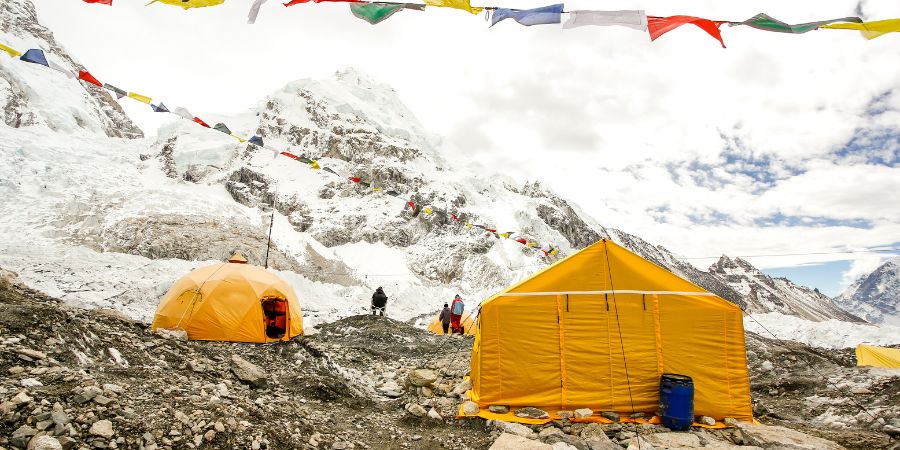
Island Peak Climbing Overview
Located in the Sagarmatha National Park, Island Peak is one of the most popular trekking peaks in Nepal. Its height is 6,189 meters and is located in the Khumbu region of the Sagarmatha National Park. Island Peak is suitable for beginners and basic-level mountain climbers. Although the technical difficulty is relatively lower than in the big mountains, there is a challenge of high altitude and crossing glaciers. After reaching the peak, all these difficulties will be forgotten by the unique beauty of the mountains. An experienced mountaineering Sherpa guide will fully support you to make your peak climbing trip a success. On the path of the approximately 14-day climbing trip, you will be able to observe the Sherpa lifestyle of the Himalayan region, traditional village surroundings, cultural heritage related to Buddhism such as: Gumba, Mane, Chaitya, etc. The beauty of the natural heritage is the main attraction here. Spring (March-May) and autumn (September-November) are the best seasons for climbing. In fact, Island Peak is a climbing trip where you will get an unforgettable experience of mountaineering as well as the opportunity to observe the wildlife of the Everest National Park, mountain plants, mountain lifestyle and Sherpa culture at once.
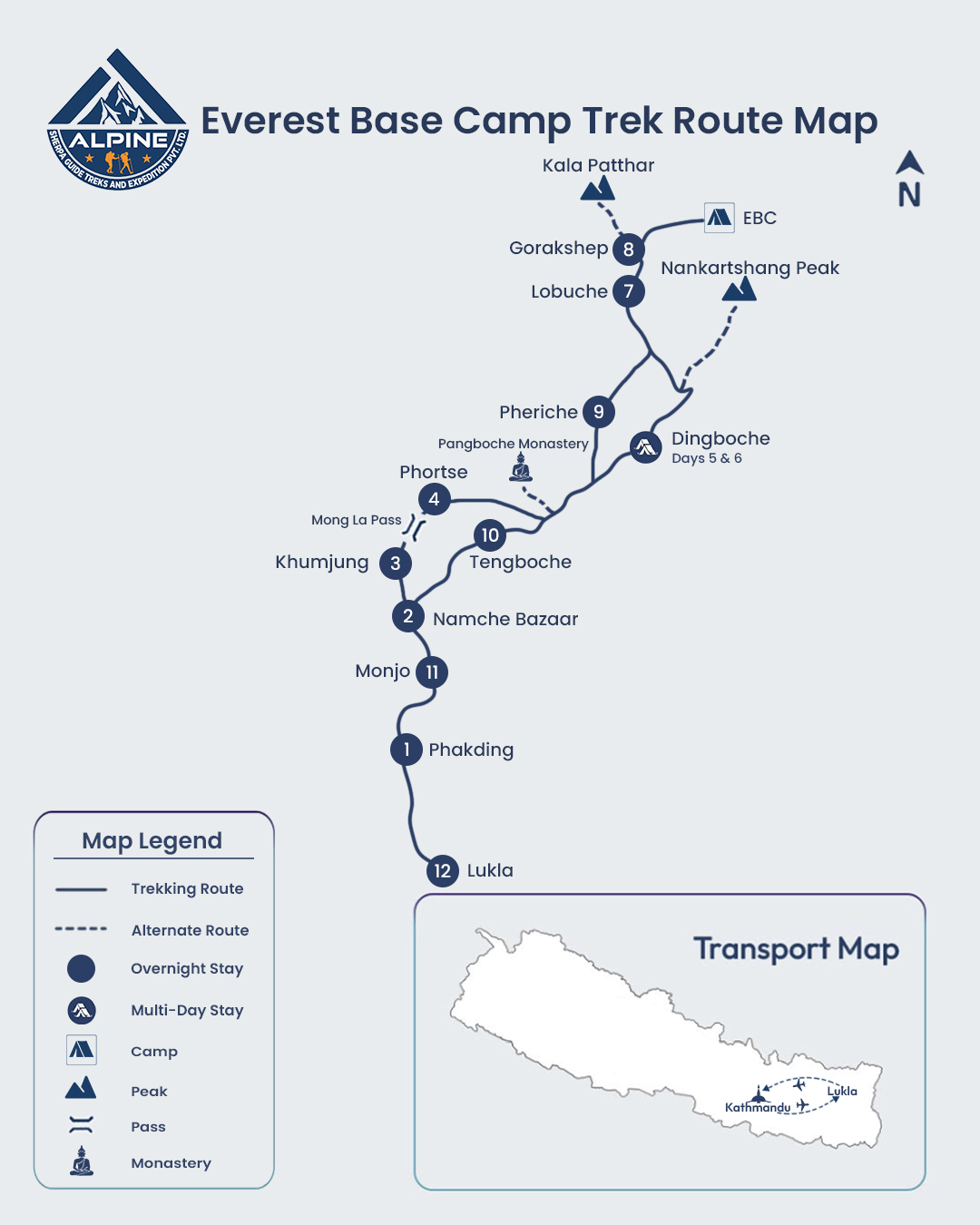
The Island Peak mountaineering trip begins after reaching Lukla, a 30-minute flight from Kathmandu. The trekking route from Lukla to Namche, Dingboche to Chukung and finally to Island Peak Base Camp is a very attractive, culturally diverse and adventurous trip. The trip proceeds from Lukla, passing beautiful villages, traditional Sherpa settlements, lush green forests of Gurans, suspension bridges and tea shops. The first night of the trip will be spent in Phakding and the second night in Namche Bazaar. From there, one reaches the historic Tengboche Monastery via Phungi Thanga, from where the wonderful view of the mountains captivates every hiker. In clear weather, mountains such as Everest, Ama Dablam, Lhotse are clearly visible. After that, one reaches the base camp by crossing Pangboche village, Dingboche. Island Peak is considered an adventurous but safe climbing trip, which offers a cultural experience, observation of natural beauty and climbing experience at the same time.
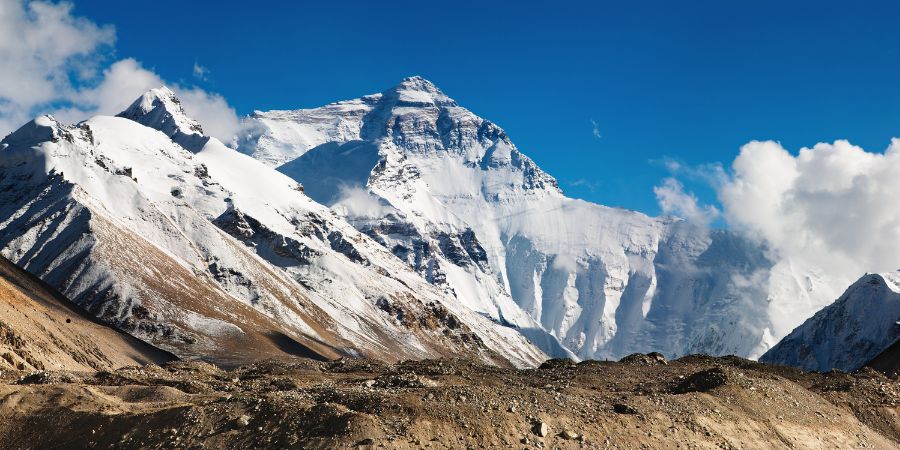
On the Island Peak climbing trip, you will get to observe the incomparable beauty of the countless snow peaks spread around after reaching Namche Bazaar. Who wouldn't be delighted to see mountains like Kusum Kanguru (6,367 m), Thamserku (6,623 m), Amadabalam (6,812 m), Khangatega (6,782 m), Everest (8,848.86 m), Lhotse (8,516 m), Lhotse Sir (8,383 m), Tawoche Peak (6,495 m), Kongde (6,187 m) and Khumbila Peak (5,761 m) all at once, as if they were talking to the sky? You too will be immersed in such natural beauty. Standing in an environment surrounded by these mountains, you will feel extremely fortunate.
Since the Sagarmatha National Park area is a place rich in natural heritage and full of biodiversity, you will be able to enjoy all this heritage while climbing Island Peak. Red and white rhododendrons, junipers, ferns, lake salo, kharsu and various types of mountain herbs are found in abundance in this area. Similarly, this area is also very rich in terms of mountain wildlife. Here you will get the opportunity to observe red pandas, snow leopards, musk deer, Himalayan Thar, and Himalayan rabbits. Birds of the Danphe and Munal species, known as national birds found only in the Himalayan region, are also found here. Therefore, this area is an ideal natural open museum for those who want to study and observe the high Himalayan environment, rare animals and plants.
The Khumbu region is considered the cultural center of the Sherpa community. You will get the opportunity to study many such cultures on the Island Peak climbing trip. Here, the lifestyle, traditions and beliefs based on Buddhism can be seen to be effectively preserved even today. The people of this region celebrate festivals like Dumji, Losar, Mani Rimdu and Buddha Jayanti with great enthusiasm. During these festivals, religious rituals, cultural dances and religious dances performed by lamas create a spiritual atmosphere. During this trek, travelers can experience these cultural reflections up close. The Buddhist stupas, monasteries, mantra-engraved stones and prayer flags visible along the way fill the entire journey with a religious and peaceful feeling. Since the rituals of marriage, birth and death are still practiced in the old style, this region feels like a living museum of Sherpa culture, where the union of spirituality and nature can be clearly experienced.
During the Island Peak trekking, you will have the opportunity to stay in comfortable tea house lodges run by the locals. In these small family-style hotels and lodges, you will feel like at home with a warm welcome, fresh organic food and friendly family treatment. You will get a chance to experience the daily lifestyle in a peaceful environment while savoring local dishes, tea and snacks. Simple yet convenient services and friendly hospitality will make your Island Peak climbing trip even more memorable.
Island Peak Climbing Highlights
- Popular Trekking Peak — Adventure Climbing Inside the Sagarmatha National Park
Island Peak with an elevation of 6,189 meters is one of Nepal's famous trekking peaks. It is basically a training center for mountaineers of the beginner and intermediate level who want to gain Himalayan climbing experience. Since it is a climb within the Sagarmatha National Park, the climb gives closeness to the views of the snow-covered peaks of the world and hence an exhilarating and a beautiful expedition as well. - Scenic & Cultural Trek Route
The Island Peak trek starts with a flying from Kathmandu to Lukla then follows a scenic trek through Namche Bazaar, Tengboche, Pangboche, Dingboche, and Chukung to reach the Base Camp. On the trek, tourists can find rhododendron (Gurans) forests, traditional Sherpa villages, and rugged terrains, which collectively represent a perfect mixture of the cultural richness and the natural charm of the Khumbu region. - Magnificent Himalayan Panorama
The likes of Mount Everest (8,848.86 m), Lhotse (8,516 m), Ama Dablam (6,812 m), Thamserku, Tawoche, and Khumbila can be seen from view points such as Namche Bazaar and Tengboche by the trekkers. The endless mountain view leaves every climber in awe thus creating memories that will always last their lifetime. - Rich Flora & Fauna of Sagarmatha National Park
This place has got diverse alpine flowers such as the red and white linden, juniper, kharsu, lake salo, and mountain herbs, thus making it a paradise for botanists. Those on trek here may also see some rare animals such as the red panda, snow leopard, musk deer, Himalayan Thar, and Himalayan hare. Because it is a protected area, it acts as a natural open-air research center for the study of the high mountain ecology and biodiversity. - A Living Reflection of Sherpa Culture and Buddhist Tradition (Cultural & Spiritual Experience)
The Khumbu region can be viewed as a concentration of Sherpa culture and Buddhist heritage. The people there are Buddhists by practice and they celebrate colorful festivals like Dumji, Losar, Mani Rimdu, and Buddha Jayanti. Hikers may sense the spiritual strength in the monasteries, stupas, Mani walls, prayer flags, and the Lamas’ melodic chanting. Moreover, it is an area where you can see that the old customs related to marriage, birth, and death are still carried out, thus comprising an intense cultural immersion. - Local Teahouse Experience (Authentic Sherpa Teahouse Hospitality)
Along the trek, you can stay at teahouses which are the home-style accommodations run by Sherpa families, and here the trekkers are served with fresh organic food, warm tea, and loving hospitality. Visitors who lodge in these hostels get the chance to interact intimately with local culture, see the simple yet purposeful lifestyle of the Sherpa people, and become witnesses to the true Himalayan friendliness. - Ideal Season & Mountaineering Experience
Island Peak Climbing is best done in the spring (March–May) and the autumn (September–November) seasons when the weather is good and the sky is clear. The ascent is a moderate one in terms of technicality, thus offering a mix of challenge and beauty - a great opportunity for those who want to combine the thrill of the adventure with the joy of the splendid views. With the help of well-experienced Sherpa mountaineers, climbers will be able to have a safe, profitable, and memorable experience in the Himalayas.
Route Overview of the Island Peak Climbing
Upon arrival in Kathmandu, we will meet you at Tribhuvan International Airport. From there, you will be taken to your hotel and rest. In the evening, you will be briefed about the island peak mountaineering program, trekking and climbing. The next morning, your guide will take you on a four-hour road trip from Kathmandu to Manthali Airport in Ramechhap, from where you will board a flight to Lukla. Since direct flights from Kathmandu to Lukla are not available during the peak tourist season, flights are made from Manthali.
After a scenic 35-minute flight from Manthali, you will reach Lukla. After spending some time in the Lukla market, obtain the necessary trekking permits and proceed towards Phakding through paths lined with Gurans trees. Passing through lush forests, suspension bridges and small settlements, you will have the opportunity to taste local organic food in villages on the banks of the Dudhkoshi. After an easy journey of about three hours from Lukla, the first day's accommodation will be in Phakding village, which is located at an altitude of 2610 meters above sea level.
The next morning, after breakfast, the journey will reach Monjo via Benkar. This is the entrance to the World Heritage-listed Everest National Park. From there, after reaching Jorsale and having lunch, the journey will proceed to Namche Bazaar. Namche is reached via a steep, sweaty path through Salla Ghari. The blue sky and the brilliance of the white mountains along the way will make you forget the fatigue of the journey. While going towards Namche, it is also possible to see Himalayan birds such as Danphe and Munal. After a journey of about 6-7 hours, when you reach Namche, its charming view, Sherpa settlement and comfortable environment will give you energy again.
The next day, you will rest in Namche and acclimatize to the altitude. On this day, you can take a short trek of about 3-4 hours to Syangboche and Khumjung, where you can enjoy the panoramic views of Everest, Amadablam, Thamserku and observe the Himalayan Sherpa culture up close.
Then the journey continues towards Tengboche. On this day, you can enjoy the panoramic views of Everest, Lhotse, Amadablam and other mountains from the road. The initial part is a horizontal path and after a slight descent, you reach Phungithanga. Lunch is served here. From there, after a two to three hour climb, you reach Tengboche. Here, you can see the mountainous vegetation, gurans trees, the Himalayan Thar, and musk deer. Seeing many tourists from Nepal and around the world carrying their yaks and donkeys, the journey becomes more interesting and the feeling of walking increases. After about 6-7 hours of walking, when you reach Tengboche Monastery, you will feel the peaceful atmosphere, cool air and natural beauty there, and all your fatigue will disappear and your mind will be filled with enthusiasm.
The next day, you will cross the tree line and enter the alpine area, and then reach Dingboche at an altitude of 4400 meters via Pangboche. There are many convenient hotel lodges for staying and eating here. There is also internet and electricity. After staying here, you can reach the next village, Chukung, in 3 to 4 hours.
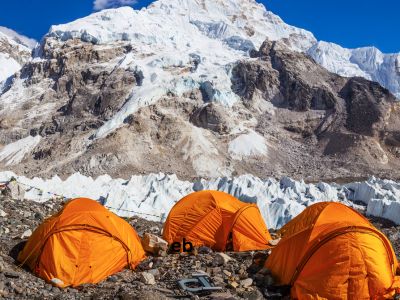
From there, you will have to move forward for about 3 hours towards the base camp the next day and stay at the base camp. Then the real mountaineering journey begins. From the base camp, you will go to the high camp with a Sherpa mountaineering guide and set off towards the summit at around 12 o'clock that night. The Sherpa guide will take you to the summit, meeting the first rays of sunrise.
From the summit, what will you experience when you find yourself standing in a peaceful and beautiful place amidst the mountains covered in white snow and shining like silver? As if you are lost in a dream, as if you have reached heaven on earth, as if you have found reality in your imagination…. In this way, you will feel the incomparable experience of achieving a glorious success in life at Island Peak Climbing. After spending some time at the summit, gathering such incredible experiences, you will return to the base camp, have some food, descend to Dingboche village, and relax with a sip of coffee. The next day, the Sherpa guide will take you to Lukla via Namche and Phakding. In the evening, you will enjoy dinner and take a flight to Kathmandu the next morning. After reaching Kathmandu, do some shopping and visit the heritage sites. The next day, according to your flight time, we will take you from the hotel to the airport and bid you farewell. You will return home with countless memories in your heart. This will be a happy ending to a beautiful Island Peak Climbing trip that you will never forget in your life.
Island peak Climbing - 16 Days Itinerary
Island Peak Climbing — What to Expect
The Island Peak climbing trip will give you trekking and actual mountain climbing all in the one adventure. First you fly from Kathmandu to Lukla (which is a wonderful adventure in itself) in a short enjoyable flight. Then you trek to wonderful Sherpa villages like Phakding, Namche Bazaar, Tengboche and Dingboche with their smiling inhabitants, prayer flags and views of the mountains.
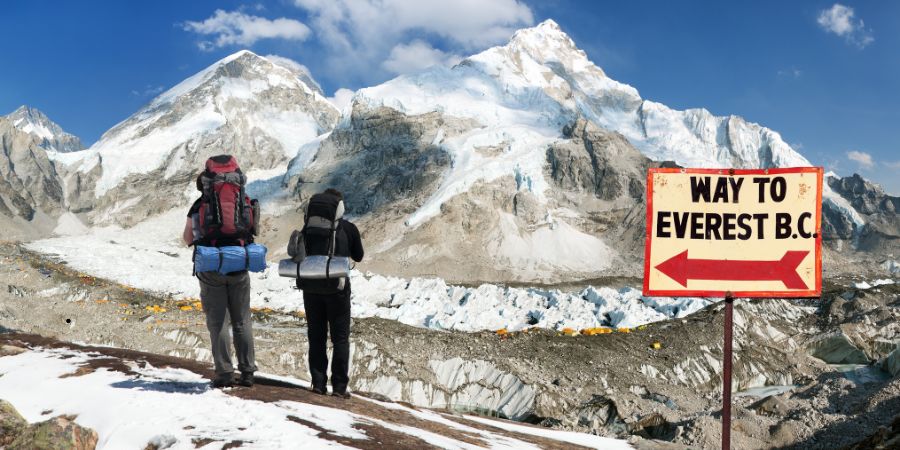
The trail climbs steadily upward and you can really experience the peace of the Khumbu region. Before you tackle the mountain you will go to Everest Base Camp and Kala Patthar to obtain that wonderful close up view of Mt. Everest and this will act as a perfect warmup and allow your body to acclimatise to the altitude as well.
Then it is off to Island Peak Base Camp which is up the trail. The guides will teach you everything to climb this peak along with how to use ropes, crampons and ice axe. Not to worry if you are not a climber as many beginners go successfully to the summit after a few days training and the right attitude to become successful.
The climb is pretty stiff and requires energy and a cool head, particularly near the summit where it is steep and icy, the reward being great.
Reaching the summit of Island Peak will be an extraordinary experience. You will be on top of the world and dizzyingly rewarded with one of the most stunning views in the Himalayas - Lhotse, Ama Dablam, Nuptse, and many more. Following the climb, you will regain your craving for food and descend for warm meals, steaming cups of tea, and feeling the love of accomplishment of such a dramatic experience.
This 16 Day Island Peak Climb is tailored for those looking for the best of both trekking and mountaineering, a true adventure, and an experience to remember as you stand above the clouds in Nepal.
Island Peak Climbing Cost—Full Breakdown
Island Peak Climbing is one of the climbs in Nepal that gives the most satisfaction and the cost varies mostly according to inclusions in your package and the size of group. On one, if one takes the package inclusive of everything, the average cost of the Island Peak Climb (16 Days) is about USD 2000 to USD 2800 per person.
If you want to make the trip more comfortable or private, the costs vary, being a little higher. On the other hand, if a group joins or a simple plan is decided upon, these expenses may be slighted saved. It is always good to know what we can get before we book. Following is a simple break-up which may help you to a greater understanding of where your money goes:
If you go with Destination Unlimited Treks, many of these costs are taken care of already and you will not have to worry about any permits or logistics. The only things you might spend extra money on are personal snacks to eat, tips for everyone, and maybe a warm drink along the way.
In summary, while the cost might seem high, it will be worthwhile — you are paying for a guided excursion into one of the most stunning trekking peaks in Nepal and developing lifetime memories.
Difficulty and Physical Fitness Required
Climbing the summit of Island Peak is not technically very difficult, but it is an adventurous outing, requiring a reasonable degree of fitness and a little mental strength. You don’t have to be a mountaineer, but you should be fit enough and have the stamina for long days to get to the climbing sections and to the summit. The walking on the trek is easy enough, being similar to the route to Everest Base Camp, but the top topography presents a certain challenge and includes ice, snow and rope work.
If you are used to a few days’ trekking in the mountains with a rucksack, you won't find the trek to the summit very difficult, provided you think a little and train beforehand. Running, cycling and climbing stairs are the best preparations. The height above 5000 m will add a little more difficulty, and portion of the programme is taken up with acclimatising and your body will enjoy the rest after having become used to the thin and rarefied atmosphere for a little while.
Most climbers say that the last pitch to the summit is the most strenuous. Climbing is not only steep and icy, but crampons and ropes are necessary. However, given a good guide and a slow steady pace, who is fittingly prepared and with the correct spirit, the operation can be tackled generally by anyone.
In short, Island Peak is an oasis for trekkers who wish to rise from a position of trekking to a medium climb in the Himalayas. There is nothing difficult about the climb, although there is nothing easy either. Provided, however, the climber is fit, optimistic and prepared and then, taking the climb coldly and gently, there is no reason why he should not be able to scale the heights.
Permits Required for the Island Peak Climbing
Before you head off to Island Peak Climbing, you will need a few permits to make certain the trip is legal and safe. Usually it is arranged by your trekking company, but it is nice to know what they are and how much they will cost. Although there are a few different optional permits, these are the main ones that will be required by the authorities in Nepal. Island Peak is located in the Sagarmatha National Park area so you will need the National Park entry permit. You will need the Khumbu Pasang Lhamu Rural Municipality permit. This was instituted over the old TIMS card in this area. Since Island Peak is a climbing peak you will need to obtain a climbing permit from the Nepal Mountaineering Association (NMA). A simple run down of the permits needed are as follows:
Getting these permits is pretty simple if you book through a local company like Destination Unlimited Treks — they’ll manage everything for you so you can just focus on your climb and enjoy the adventure.
Island Peak Climbing vs. Other Treks in Everest
Island Peak is quite different from the other treks in the Everest region as it combines ordinary trekking with real mountaineering techniques. The other treks for instance, the classic Everest Base Camp Trek or Gokyo Lakes Trek, are mostly concerned with following walking trails and visiting villages and lakes and views of mountains, but Island Peak includes the excitement of climbing a real Himalayan peak which gives it its uniqueness.
Island peak is compared to the Everest Base Camp Trek, more difficult than EBC. You still walk through the same beautiful Sherpa villages and high valleys as in the EBC trek, but the final summit climb requires the use of ropes, crampons and ice axes. This means it is not pure walking but is real climbing, but is possible for anyone of average fitness.
If you look at the Gokyo Lakes Trek, this is a more scenic and quieter trek with its turquoise lakes and optional climbs such as the Gokyo Ri, but it does not contain any real peak to summit. Island Peak gives you that feeling of “standing on top of a mountain”, which is unique and unforgettable.
In summary then, if you want a combination of trekking and climbing, Island Peak is a perfect answer. If however, you want to do a bit of a gentler orientated adventure with no climbing, the EBC or the Gokyo treks would be softer options. Island Peak is for those who want more challenge, beautiful mountain views and achievement.
What is the best season to climb Island Peak Climbing ?
The best time to attempt to climb Island Peak is during the periods of stability when the weather is clear. The weather in the Himalayas is notoriously unpredictable and therefore choosing the locating time can ensure improved overall safety, vistas and experience levels. Climbers will generally attempt to do this in either of the two seasons - spring or autumn months - as these months tend to provide clear skies, reasonable temperatures and little opportunity for rain or snow or storm. Climbing at other seasons is meritless because winter is so cold and demanding and the monsoon season brings heavy rain, cloud and very slippery trails.
To give you an idea of how these seasons break down we have provided this simple guide:
- Spring (March - May):
Warm days, clear skies, rhododendrons blooming along the trail and a great visibility of mountains. Conditions for climbing peak are perfect. - Autumn (September - November):
Cool and stable weather, little chance of rain and magnificent clear mountain views. This is the most preferred season for climbers. - Winter (December - February):
Very cold, plenty of snow. Trails can be icy and demanding. This season is recommended only for very experienced climbers. - Monsoon (June - August):
Heavy rain, slippery trails and cloudy skies. So views are often obscured that this is not a suitable season for climbing.
Therefore overall the safest seasons when an expedition to climb Island Peak should be undertaken are the spring and autumn months in order to get clear skies, safe trails and wonderful views of the Himalayas.
Trip Essentials And Trip Information
Before you set out on the trek to Island Peak Climbing, it is wise to prepare some practical steps. Nothing major, but they will ultimately save you unnecessary complications to your journey.
If you are not from India, you will need a Nepal tourist visa. You can get it on arrival at Kathmandu airport. Just ensure your passport has a minimum of six months validity. A 15-day tourist visa is roughly $30.
In addition, you will need some money in Nepalese Rupees (NPR), to pay for tea houses, snacks, hot showers, or charging electronic devices, etc. You’re better to swap currency either in Kathmandu or Pokhara since there are limited ATMs in the mountains. It’s also advisable to take some small denominations with you on the trail.
Travel insurance is vital. Get benefits for high-altitude trekking, emergency helicopter evacuation, and medical treatment. Go with both a physical copy and a digital one. It’s a relatively small cost for huge peace of mind.
How To Book This Trek?
Booking your Island Peak Climbing trek with Destination Unlimited Treks is simple and worry-free. Just take a moment to prepare for your arrival. First, you can either contact us through our website, email, or WhatsApp, and we will respond to as quickly as possible and answer all of your questions! Next, we will ask your preferred start date. Based on the weather, flights, and your schedule, we will work with you to choose the best dates.
Then, we will send you all trip details via email along with the inclusions (which is mostly everything including permits, flights, guides, porters, accommodations, meals and anything in between!). Once you are satisfied, comfortable, and happy with everything, a simple deposit of approximately 20% is needed to reserve your trek (note: deposits can be done online by credit card or bank transfer and sometimes in person upon your arrival in Kathmandu).
Once your trek is confirmed, we will send you a packing list, climbing and trekking tips, and any other essential information in order for you to be ready for your trip.
With Destination Unlimited Treks, all of your trip will be thought of from start to finish so you do not have to worry about anything except having fun in the mountains and on your adventure!