Everest Three Passes Trek Overview
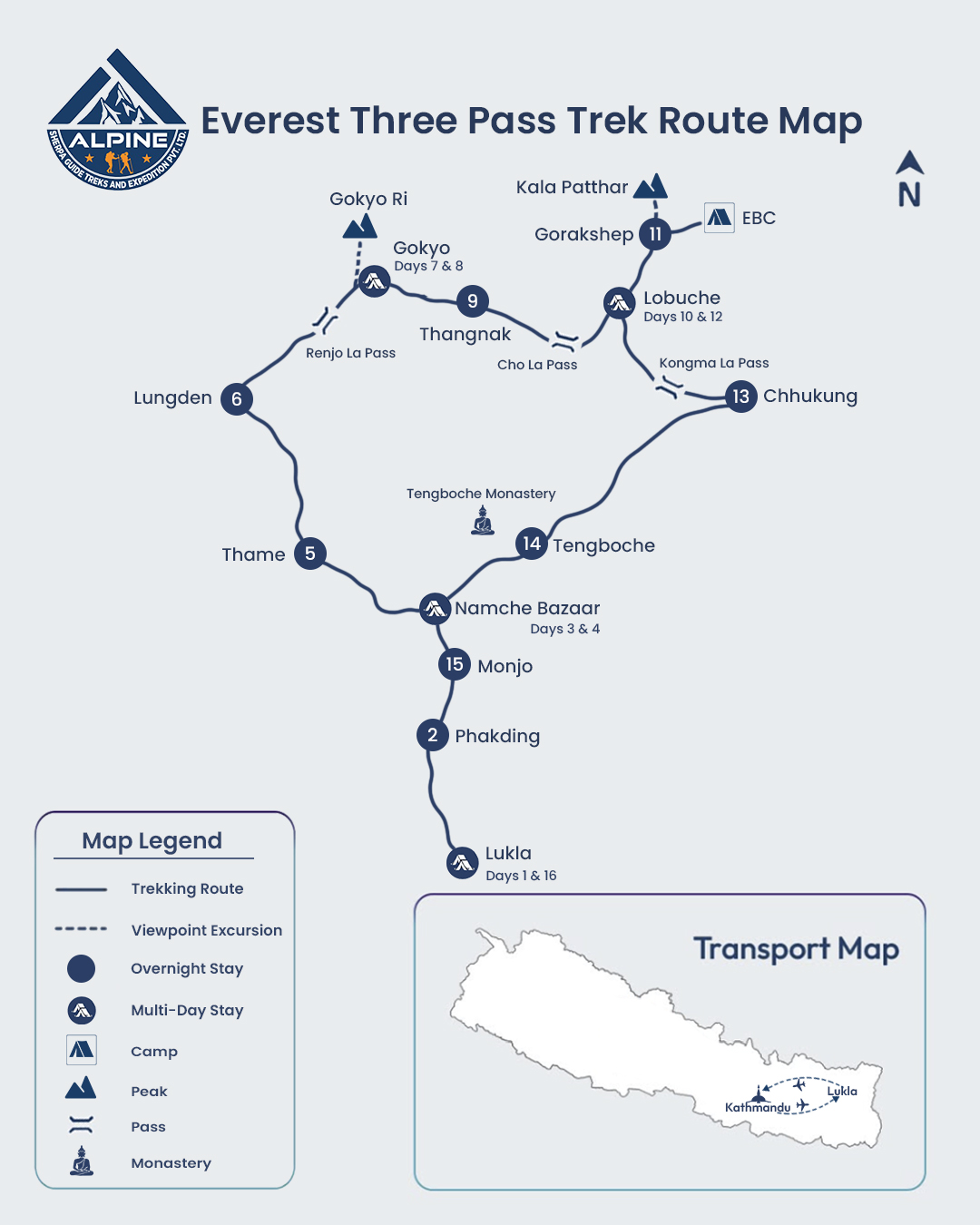
The Everest Three Passes Trek is a major trek in the Khumbu region. It is called the Three Pass Trek because it traverses three passes in the Khumbu region of Nepal. It passes through Kongma La Pass (5,535 m / 18,159 ft), Cho La Pass (5,420 m / 17,782 ft), and Renjo La Pass (5,360 m / 17,585 ft). The trek not only covers Everest Base Camp (5,364 m) and Kala Patthar (5,545 m) but also visits Gokyo Ri (5,357 m) and the breathtaking Gokyo Lakes. It is a 20-day trek. In terms of difficulty, it is considered tough (three passes above 5,000 m). You can do this trek during spring (March - May) or autumn (September - November). Are you planning to travel? You can consider the Destination Unlimited Trek for the journey.
This trek starts mainly after leaving Lukla for Phakading. In Lukla, you will see many trekkers. You will find some excitement and enthusiasm in them. Perhaps they think that we are traveling to the highest peak, Mount Everest. You should tie your shoes. Adjust the straps of your bag. Now the journey begins. Travel and trekking paths are not the same. You can enjoy the real pleasure of trekking on these different paths. The journey is made through stone and gravel paths. Sometimes you travel through forests, sometimes rivers and streams and suspension bridges. Sometimes you will find yourself in dense forests of Rhododendrons, sometimes on the banks of milk banks. You will be chased by snow somewhere and sometimes by rocky, bare mountains when you are in a hurry. The journey through various passes is also difficult.
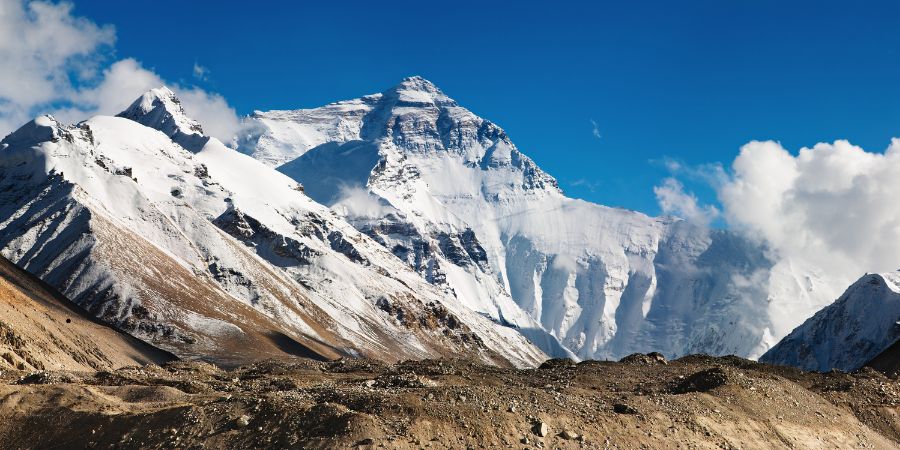
When you enter the area of the three highest passes—Kongma La, Cho La, and Renjo La—you will feel a new achievement with every breath. Perhaps this feeling is the greatest thing for a trekker. The journey is not easy. You have to walk on snow, fearing that you will slip. The amount of oxygen decreases in the high passes. You have to move forward as a brave warrior with every step. In these passes, you have to fight against the challenges of strong winds, sudden snowfall, and high-altitude dizziness. Finally, after reaching a point in the journey, you will see the huge mountains like Everest, Lhotse, Makalu, Cho Oyu, Pumori, Nuptse, and Ama Dablam from close range. You can make the memory darker through video and photo. You feel very proud when you step on these huge peaks and stand tall.
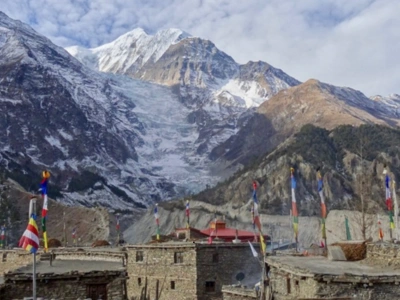
This journey is not just about mountain climbing and seeing the mountains. You can also learn about the life of the Sherpa tribe living in the Himalayan region of Nepal. When you stay in tea houses and taste the Himalayan cuisine, perhaps you will feel the importance of the journey more. You will see the Sherpa settlements decorated with colorful prayer flags. You will see various objects related to Buddhism, like monasteries and mani walls. You will also see monks praying in the evenings in the monasteries. Perhaps such scenes can inspire you more spiritually. You will feel that your journey is more powerful when you trek during festivals like Mani Rimdu or Dumje. This festival is celebrated specially. During this festival, dancers wearing elaborate masks roam and dance in the courtyard of the monastery. Families gather, play drums, blow trumpets, and enjoy a moment of celebration together. Truly, you will see new life here.
This trekking route within the Sagarmatha National Park is naturally rich. The lush vegetation here, including cedar, lake salo, dhupi, gurans, kharsu, and especially the beauty of the red and white colored laligurans in spring, will make you happy. In terms of fauna, you will also get the opportunity to see rare snow leopards and musk deer, as well as mammals like the Himalayan black bear and Himalayan Thar. For bird lovers, colorful birds like the dafe, forest chicken, and monal are an additional attraction of this trek. The biodiversity of this area will make your Everest Mani Rimdu Festival Trek even more enjoyable and unforgettable.
Do you want to do this trek with Destination Unlimited Trek? Do you want to know or understand anything about this trek? Our expert team is available 24/7 at your service.
Everest Three Passes Trek Highlights
- Conquer three legendary peaks - You will reach the great peaks of the world. You will set foot on passes above 5000 meters like Kongma La (5,535 meters), Cho La (5,420 meters), and Renjo La (5,360 meters).
- Panoramic views of Everest - This journey is all about seeing the mountains and experiencing the mountains. You will see Everest, Lhotse, Makalu, Cho Oyu, Ama Dablam, Nuptse, Pumori, and countless other peaks above 8,000 meters on this trek. You will make many memories with the mountains.
- Sherpa culture and monasteries - The Everest region is the home of the Sherpa people. Here you can see Tibetan Buddhism. The culture of the Sherpa people can be easily seen in Namche Bazaar, Tengboche and remote high-altitude villages. Monks praying in monasteries are also easy to spot.
- Teahouse Trekking Experience - You will spend a few nights in comfortable mountain lodges while enjoying local Nepali and Tibetan-inspired cuisine. These teahouses are unique. You will not be able to experience what you will experience here anywhere else in the world.
- Off-the-beaten-path adventure - This is a remote trek that is less crowded than the classic EBC route. You will travel through valleys, glacial lakes, and rough paths. This will be a special exploration for you.
- Kala Patthar and Gokyo Ri Views - You will get to see Kala Patthar and Gokyo Ri up close, along with unique views of sunrise and sunset from the Everest region.
- Gokyo Lake and Ngojumpa Glacier - You will visit turquoise high-altitude lakes. You will cross the longest glacier in Nepal.
Route Overview of the Everest Three Passes Trek
We will meet you at Tribhuvan International Airport on the first day. This will be our first meeting. The next day, as per the program, we will visit some tourist attractions in Kathmandu and the next day we will fly to Lukla. Since there is no direct flight from Kathmandu to Lukla during the busy season, we will have to take a 4-hour road trip to Manthali, another airport, and then fly to Lukla. The official start of our trek is Lukla, 2840 m. From Lukla, our journey will first be downhill. After that, we will travel through some normal ups and downs through the Gurans forest, tea house lodges on the route, and Sherpa villages. After a 3-hour journey, you will reach Phakding.
The next day, along the banks of the Dudh Koshi, we will cross many suspension bridges including the Hillary Suspension Bridge and enter Manjo in the Everest region. This is also the gateway to the Khumbu region. After a short climb from here, we will reach Namche Bazaar. This is also the best place for acclimatization. The trail from Namche Bazaar to Tengboche and Dingboche is of mixed nature. The first trek descends towards the banks of Dudh Koshi through the Rhododendron forest. You will see beautiful views of Everest and Ama Dablam. After a short steep climb, you will reach the Tengboche monastery, the largest in Khumbu. Here we will spend one night. The trek from Tengboche to Dingboche is a bit different. In this section, you will reach old Sherpa villages like Pangboche and Shomare. The terrain changes with altitude - less forest, more alpine terrain.
One of the most difficult days of the trek is the trek to the high Kongma La Pass.
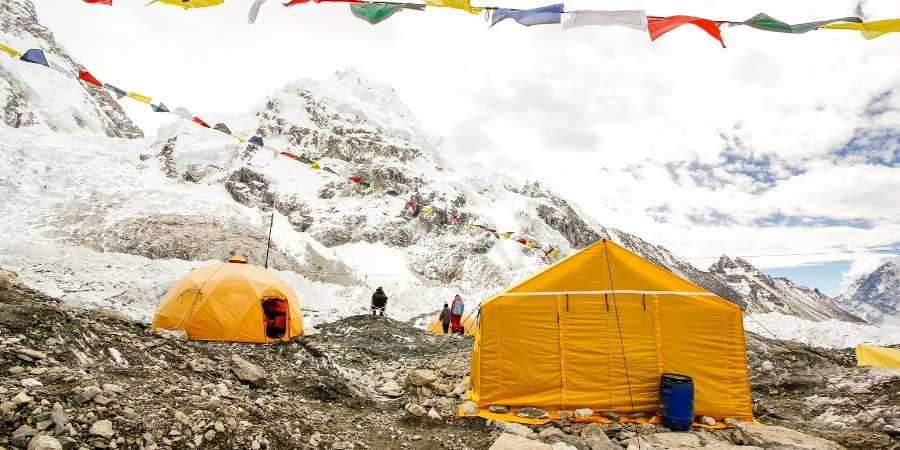
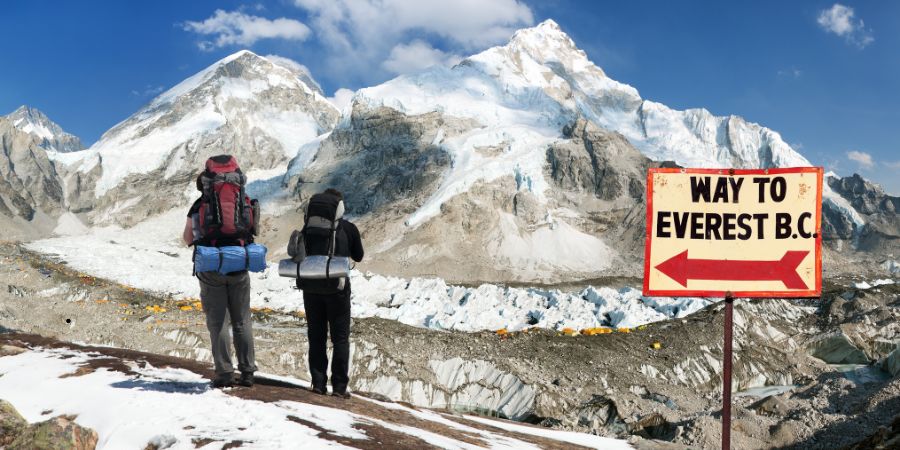
The trek to the high Kongma La Pass will be unforgettable for you. After descending from this pass, you will reach Lobuche. We will spend one night in Lobuche.The next day we trek through the Khumbu Glacier to Gorakh Shep. This is an unforgettable day for us. After lunch in Gorakh Shep, we trek to the Everest Base Camp and finally return to Gorakh Shep.
Every time you reach the main passes, you will feel some challenge. You will feel the same challenge when climbing the steep and ice-filled Cho La Pass. After crossing this pass, you will descend towards the Gokyo Valley. The trek gradually progresses towards the Ngojumpa Glacier. One night will be spent in Gokyo. We will start our trek early in the morning to enjoy the magnificent panoramic views of Mount Everest, Cho Oyu, Makalu and the surrounding peaks. The journey will end at Renjo La. This is the last high pass of the trek. After a short downhill journey from here, we will reach the peaceful Sherpa settlement of Marlung. Here we will spend one night. Thus ends our Everest Three Pass Trek. We will return to Kathmandu via Namche Bazaar, Lukla and then to Kathmandu where our journey will end.
Everest Three Passes Trek - 20 Days Itinerary
Everest Three Passes Trek — What to Expect
Want to embark on an adventure that will last in your memories forever? The Everest Three Passes Trek offers a unique experience in the heart of the Himalayas by successfully crossing the three high mountain passes, Cho La, Kongma La, and Renjo La, will get you amazing views of some of the biggest mountains on the planet that include Everest, Lhotse, Makalu along with the gorgeous landscape of the Khumbu area. This trek is for those who want a more challenging trek that will be bogged down by hords of trekkers by choosing the more traditional Everest Base Camp Trek.
Most days you are walking for long hours. Some sections of the journey are very steep and rocky, and especially when crossing the high passes. We will reach altitudes higher than 5300 meters, we will allocate days of rest to help our bodies acclimatize. There will be plenty of diverse terrain along the way with lush green forests, colourful Sherpa villages, stunning glaciers and beautiful turquoise lakes.
One of the best parts of this trek will be staying in teahouses and meeting the local people, and learning about their way of life. Of course, the views will be incredible but you will leave feeling fulfilled with the overall experience.
The trek is challenging and you want to prepare both physically and mentally, but the feeling of accomplishment when you finish the trek is well worth the difficulties faced along the way. If you have been looking at tours that offer a challenging trek with amazing scenery and a genuine culture, the Everest Three Passes Trek is an option!
Everest Three Passes Trek Cost—Full Breakdown
Budgeting for the Everest Three Passes Trek ? Here’s a simple breakdown of what you’ll need to know regarding the estimated cost for this trek. Costs can vary depending on how you travel and what you choose, but this gives you a good idea of what to expect.
Keep in mind, these costs are not exact and will vary with season and type of service you choose. It always good practice to budget a little extra money for emergencies and to cover unexpected expenses.
If you book your trek through Destination Unlimited Treks, you may find it easier to manage these costs because you can have permits, flights and guides all bundled together.
Difficulty and Physical Fitness Required
The Everest Three Passes Trek is not a walk in the park. You will need to prepare to walk hard over three high mountain passes – some steep and rocky. Most days you will spend many hours walking, often above 5,000 meters!
You do not need to be an expert climber or anything, but it is good to be in good shape and prepared to do some long days of walking. It also helps if you have some previous trekking or hiking experience, because bag carrying and walking for hours can fatigue you.
Altitude sickness can affect anyone, even it you are fit, therefore the trek includes rest days to help your body acclimatize. It is important to listen to your body and eat it slow.
This trek will be fine if you are an experienced outdoor person who enjoys the outdoors, hiking or simply staying active and do not mind a challenge. However, it is absolutely not a trek for beginner trekkers and anyone who does not enjoy hard work.
Permits Required for the Everest Three Passes Trek
Before you start the Everest Three Passes Trek, you gotta have a few permits sorted out. These papers basically give you permission to enter certain protected areas and keep your trek legal. Getting them isn’t usually hard — you can get most in Kathmandu or Lukla, and booking through Destination Unlimited Treks, we will take care of it for you so you don’t have to worry.
Here’s the list of main permits you’ll need on this trek:
Everest Three Passes Trek vs. Other Treks in Everest
If you're considering a trek within the Everest region, you have options! You can do the classic Everest Base Camp Trek, the lessor trafficked Gokyo Lakes Trek, and the trek that has it all - Everest Three Passes Trek. Each trek has its own distinct beauty but the Three Passes is the all-inclusive experience; it is longer, harder, and connects with almost every region within the Everest region. Rather than climbing just one trail, this trek is a link that spans each area of the region - three big passes: Kongma La, Cho La, and Renjo La. You will see fantastic vistas from so many different perspectives.
While the Everest base camp trek is less complicated and not very long, it is just a hike to the bottom of Mt. Everest and back. Great if you are limited on time and after a simple trip. The Gokyo Lakes trek is restful with the beautiful aqua blue lakes and climb to Gokyo Ri - in my opinion, one of the best panoramic views in the Himalayas - but lacks the high snowy, dramatic passes we saw during the three passes trek.
Again, the main differences here are variety and difficulty! The Three Passes Route has glaciers, deep valleys, glimmering lakes, and high snowy passes that literally take you to another level!
It’s definitely harder than the other two, but on the bright side, you get fewer people on some parts and a much richer sense of adventure. If you’re fit enough, have the time, and want to explore the Everest region like no other, the Three Passes trek is the way to go.
At the end of the day, it all depends on what you want. If you want a short and famous trek, EBC is perfect. If quiet lakes and less crowd are your thing, go for Gokyo. But if you want to challenge yourself and see every highlight the Khumbu has, the Everest Three Passes Trek is simply the best choice.
What is the best season to trek Everest Three Passes Trek ?
The Everest Three Passes Trek can be done most times of the year, but the overall experience changes a lot depending on the season. Things like weather, trail condition, visibility, and even how crowded it gets can make your journey either smooth or a bit challenging. Picking the right time will help you get the best views, stay safer, and enjoy the trek more.
Here’s the seasonal breakdown for Everest Three Passes Trek in bullet points:
Spring (March – May)
- Clear skies and stable weather, perfect for mountain views.
- Blooming rhododendrons and lush greenery add color to the trails.
- Moderate temperatures at lower altitudes, comfortable for trekking.
- Popular season, so expect more trekkers on the route.
Best for: Clear mountain views, colorful landscapes, and moderate temperatures.
Summer/Monsoon (June – August)
- Warm temperatures but heavy rainfall, especially at lower elevations.
- Slippery and muddy trails; leeches in some lower areas.
- Clouds may block mountain views, but landscapes are greener.
- Fewer trekkers, offering a quieter experience.
Best for: Trekkers who don’t mind rain and want fewer people on the trail.
Autumn (September – November)
- Best weather conditions for trekking—clear, dry, and stable.
- Crisp mountain views with excellent visibility.
- Mild days and cool nights at higher altitudes.
- Peak trekking season, so some sections can be busy.
Best for: The clearest skies, comfortable trekking weather, and vibrant landscapes.
Winter (December – February)
- Cold temperatures, especially at high passes.
- Trails are quieter with fewer trekkers.
- Snow can block some high passes, requiring flexible plans.
- Stunning, clear skies on sunny days.
Best for: Experienced trekkers who enjoy quiet trails and don’t mind the cold.
Trip Essentials And Trip Information
Before you undertake the Everest Three Passes Trek, it’s helpful to get a few administrative items taken care of prior to setting foot on the trail. It is one of the most challenging treks in Nepal and being able to anticipate the challenges can aid in your safety and enjoyment. And from visas to equipment, here’s that you need to do or know prior to attempting those three passes.
- Visa for Nepal
You will need a tourist visa, not just if you are not from India. It is easy to get a visa on arrival at the airport in Kathmandu. The costs for a 30-day visa is roughly $50. Your passport must be valid for at least 6 months. You may also choose to apply in advance, electronically, if you like to avoid the paperwork at the airport. - Money and the Exchange Rate
Nepal uses the Nepali Rupee (NPR). It is better to use cash for tea houses, snacks, hot showers, Wi-Fi, and other extras during your trek. It is better to change or withdraw money in Kathmandu before heading to the mountains as ATMs are scarce or reliable in the Everest region. - Travel Insurance
And finally, be sure you have travel insurance that provides some coverage for high-altitude trekking (up to and including 5,600+ meters) and emergency helicopter/high-altitude evacuation. There are three passes which peak above 5,000 meters and having proper coverage will come in handy if altitude sickness or any other emergencies arise.
How To Book This Trek?
Booking your Everest Three Passes Trek with Destination Unlimited Treks is a hassle-free process. We always prefer to plan things out in advance so everything is organised before you arrive in Nepal. Here is a step-by-step guide to the whole trek booking process:
- Contact Us
You can get in touch with us via our website, email or even via WhatsApp message. We’re very fast to respond to you and are happy to answer all your questions before you click to confirm. - Select Your Dates
You will need tell us when you want to start the trek. We will help you choose the best dates according to the weather, your travel itinerary, and flight availability to Lukla. - Verify the Details of the Itinerary
We will send you a complete list of inclusions and exclusions; permits, domestic flights, accommodation, meals, guide, porter; and anything else you will need, including all the information you need. - Make Your Reservation
Once you are happy with everything, we will require a small deposit of at least 20% to secure the trek. We accept payment online, by bank transfer and in some cases in person when you arrive in Kathmandu. - Collect Your Things Together for the Trek
After you have made your booking you will be emailed a packing list, trekking tips and all of the information you will need to get ready for the trek!
With Destination Unlimited Treks, you don’t just book a trek with a company, you book peace of mind with your entire experience planned for you from the moment you touch down in Nepal until you enter the departure lounge for your flight home!