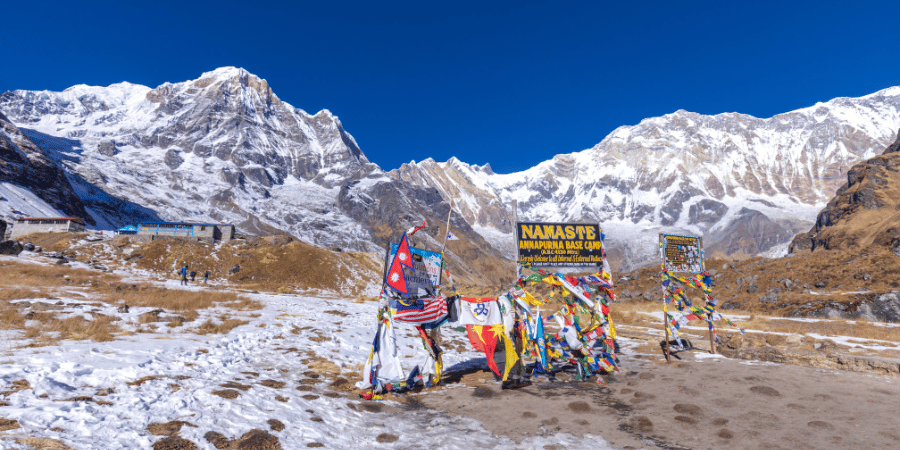
Annapurna Base Camp Short Trek – 10-Day Overview & Highlights
Are you looking for a shorter Annapurna trek? This 10-day Annapurna Base Camp Short Trek offers a scenic, culturally immersive, and adventure-filled journey in a compact itinerary. Starting and ending in Kathmandu, the moderately difficult trek itself leads to the Annapurna Base Camp, situated at 4,130 meters (13,500 feet). This entire journey is best experienced during the spring (March to May) and autumn (September to November) seasons. Whether you are trekking solo or in a group, this short Annapurna adventure offers a once-in-a-lifetime Himalayan experience.
This shorter Annapurna trek in Nepal is the perfect Himalayan adventure for trekkers who want to experience all of the Himalayan culture, landscape, and traditional local hospitality by Gurung, Lama, and Magar communities.
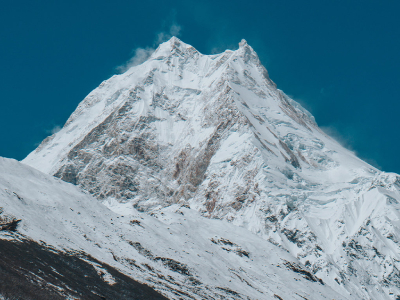
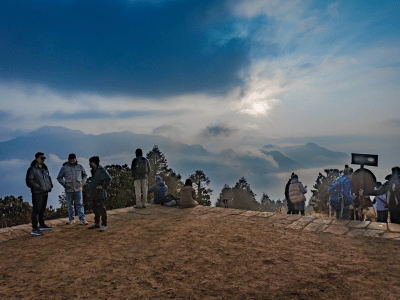
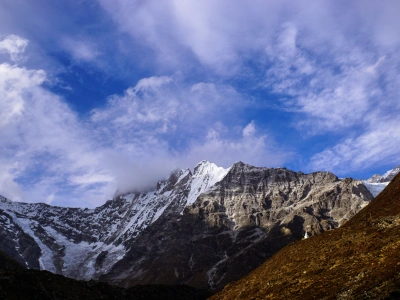
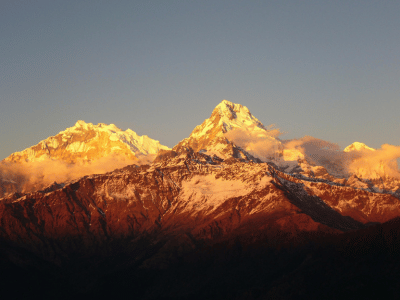
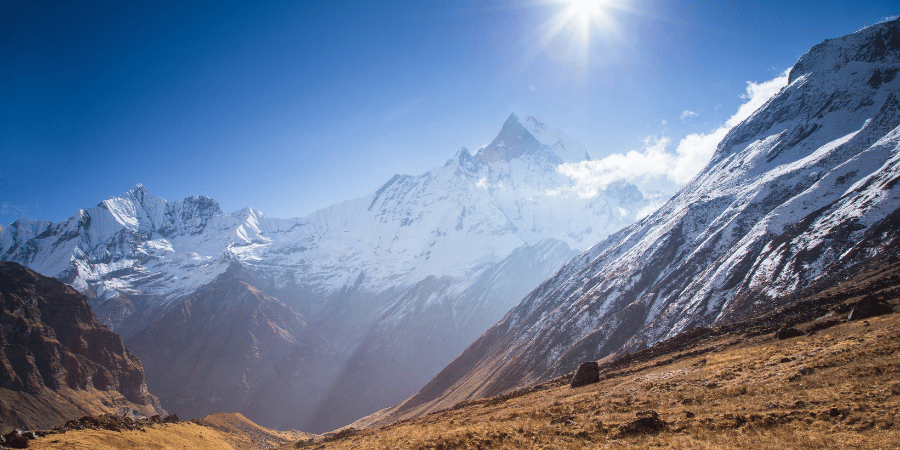
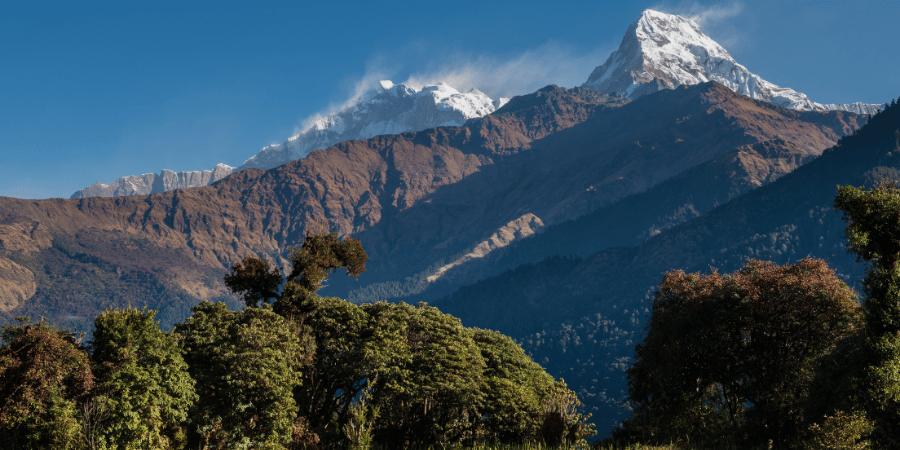
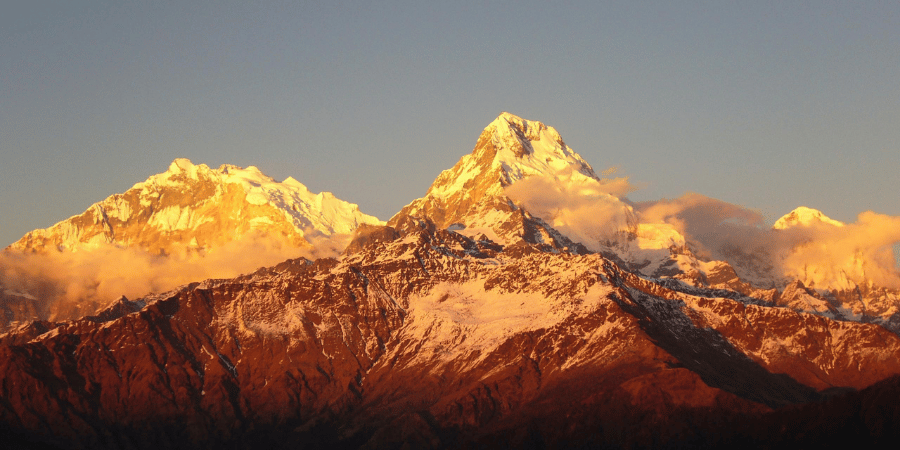
On this trek, you’ll reach the base camp of the world’s 10th-highest mountain. The trail takes you along rivers, where you can hear the soothing sound of flowing water, and through lush forests and snow-covered paths that rise and fall with the landscape. Along the way, you will witness panoramic views of Annapurna South, Machhapuchhre, Gangapurna, Hiunchuli, Annapurna II, and Annapurna III from either Chhomrong or Annapurna Base Camp. As you enter into Annapurna Sanctuary (a natural amphitheater of mountains), you might find yourself slowly turning in awe, saying, “Oh, are the mountains really surrounding this place?” Here, you can record yourself and create memories for a lifetime.
On the other hand, culture, festivals, food, and celebrations are other special attractions on this short, scenic trek in the Annapurna region. You will immerse yourself in Gurung culture and witness traditional Ghatu Naach (Gurung culture dance) and Rodhi culture. During Ghatu Naach, you might even find yourself dancing, while our guide Dai will capture fun reels for you.
During festivals like Lhosar, you will get to taste the Gurung family's special dish Khapse (fried pastries), Dresi (sweetened rice with raisins), and various meat dishes. And who knows? At this moment, you might feel like a food engineer in the Himalayas.
When we trek in Birethanti and Hille, you will notice elements of Magar culture and their traditional dance if you are trekking in the festive season. You may also meet local people speaking Magar Dhut, the Magar language.
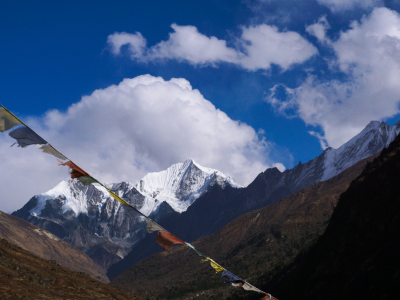
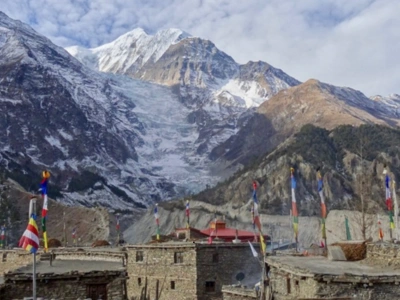
As you go higher, especially around Tadapani and forest areas, you'll begin to notice strong Buddhist influence: prayer flags, Mani walls, and stupas. Along the trail. These areas are deeply influenced by Tibetan Buddhism and Lama culture.
Quick Facts About the ABC Short Trek
- Trek Duration: 10 Days
- Trekking Days: 6 Days (Approx.)
- Max Altitude: 4,130 m / 13,500 ft (Annapurna Base Camp)
- Trek Difficulty: Moderate
- Trek Region: Annapurna Region, Gandaki Province, Nepal
- Start/End Point: Kathmandu → Annapurna Base Camp → Kathmandu
- Total Distance: ~70–75 km (round trip)
- Best Seasons: Spring (March–May), Autumn (September–November)
- Average Temperature at Base Camp:Day: 5°C to 15°C,Night: -10°C to 0°C
- Trek Type: Tea House Trek
- Trek Style: Group or Private/Guided
- Trek Permits: Annapurna Conservation Area Permit (ACAP), TIMS Card (Trekkers’ Information Management System), Accommodation: Hotels in cities, Tea Houses on trek
- Meals: Dal Bhat, noodles, momo, fried rice, Tibetan bread, tea
- Transportation: Tourist bus, Jeep/Car (optional: Domestic flight to Pokhara)
- Mobile Coverage: Available at lower altitudes, limited at Base Camp
- Wi-Fi & Charging: Available in some tea houses for an extra cost
- Travel Insurance: Mandatory (should cover 4,000 m+ trekking)
Cost Guide: How Much Does the Annapurna Short Trek Cost?
The cost of the Annapurna Base Camp trek typically ranges from US$65 to US$120 per day, which means a 10-day trek can cost between US$650 and US$1,200, depending on your choices and services. Here are a few lists of things that affect the cost of the ABC trek.
-Classical vs. shorter version of routes.
-Basic tea house vs. luxury hotel/lodge.
-Flights vs. road.
-Private vs shared porter.
-Group vs. solo travel.
-Season vs. off-season travel
If you travel by domestic flight, stay at a mid-range hotel/lodge, and hire a personal guide or porter, then it costs more. But group travel and off-season trekking can be budget-friendly and reduce your expenses.
Route Overview: Trails, Villages & Viewpoints
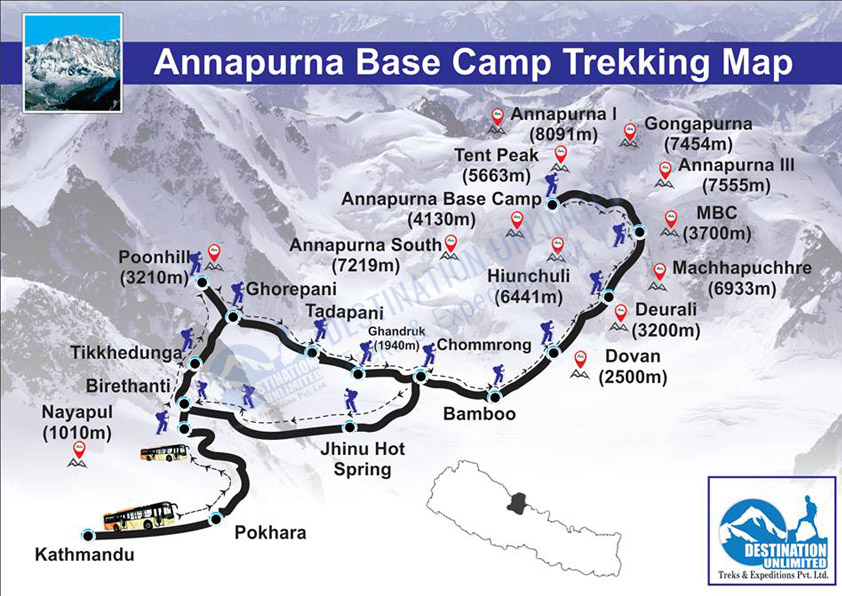
The trek, Annapurna Base Camp 10 days, begins from Kathmandu. When you arrive at Tribhuwan International Airport, our team welcomes and greets you there and takes you to the hotel. The trek begins at Siwai, making it one of the fastest routes to the Annapurna Base Camp Trek – 10 Days, ideal for trekkers with limited time.
The next day, we drive to Pokhara by tourist bus (optional: flight also available at extra cost). We drive through Naubishe, Kurintar, Muglin, Dumre, Bandipur, and Damauli. During the journey, you can see rivers, hills, forests, and amazing nature. After 8-9 hours of long driving, we will reach Pokhara. Pokhara is the second largest city in Nepal and is also called the city of lakes. Today, we will stay at Pokhara overnight at a hotel.
On the third day morning, we start to drive from Pokhara to Nayapul, through the Baglung Highway, which takes 42 kilometers and around 1.5 to 2 hours by road. Now, we drive to Siwai from Nayapul, which takes around 26 km and 1.5 to 2 hours by jeep.
Siwai is our first trekking point. Now, we start to trek from Siwai to Jhinu Danda (Natural Hot Spring). Jhinu Danda (1780 meters) is at a distance of 3.5 km from Siwai, and it takes around 1.5 to 2 hours to reach there by trekking.
After trekking, we take some rest at Jhinu Danda, and then we start to trek again to Chhomrong (2170 meters). It is at a distance of 3 kilometers and takes around 2 to 2.5 hours.
Here is a detailed breakdown of the segment, distance, time, and mode of journey.
Table: Siwai Chhomrong route details
The next day, our trek starts again from Chhomrong to the Himalaya. Chhomrong is approximately 10-12 km away and takes around 5-6 hours to trek. It includes some popular trekking points like
-Chhomrong Khola (1,850 m)
-Sinuwa (2,340 m)
-Bamboo (2,310 m)
-Dovan (2,600 m)
-Himalaya (2,900 m)
The path passes through stone steps, deep forest, villages, and trails. Today, we stay in a teahouse in the Himalayas.
Now, we have to reach the Annapurna Base Camp. We begin to trek from the Himalaya to ABC through Deurali (3,230 m) and Machhapurche Base Camp (3,700 m). Today, we are staying at ABC in the tea house. The next morning, we explore the ABC region and get ready to trek back to Bamboo (14 km to 15 km). After 6 to 7 hours of trekking from ABC, we reach the Bamboo, where we stay overnight. The next morning, we start trekking again to Jhinu Danda, which takes 4 to 5 hours.
Finally, Journey gets back to Pokhara from Jhinu Danda through Siwai, Birethanti, and Nayapul. At Pokhara, we stay overnight. It is the last day of the trek. The next day, the journey reaches Kathmandu and ends.
Related & Alternate Treks Near Annapurna Base Camp
Other alternate treks take you through different routes and span different days. Nowadays, Annapurna Region treks are going to be shorter. Here we have a short list of the best related and alternate treks.
Annapurna Base Camp Trek 15 Days
It is a 15-day-long trek. It is a little longer but provides immense enjoyment and Himalayan observations. This Annapurna short base camp trek diverges from Nayapul to Jhinu Danda. But the 15-day-long trek takes a route to Tikhedhunga, Ulleri, Ghorepani, Poon Hill, and finally to Chhomrong.
Annapurna Base Camp shortest Trek - 6 Days
The 6-day Annapurna Base Camp trek takes you from Pokhara through Chhomrong, Dobhan, and Deurali to the ABC (4,130 m). Enjoy close-up views of Annapurna I, Machhapuchhre, Hiunchuli, and Annapurna South, while experiencing the warm hospitality, culture, and lifestyle of Gurung and Magar villages.
Annapurna Circuit Trek – 19 Days
The Annapurna Circuit Trek takes you on a 19-day journey around the Annapurna Massif, crossing the world’s highest trekking pass, Thorong La (5,416 m). Enjoy breathtaking views of Annapurna, Dhaulagiri, and Manaslu, while experiencing rich culture, sacred temples, alpine lakes, and warm hospitality of Gurung, Thakali, and Manangi communities.
Also, read this comparison.
Annapurna Base Camp Short Trek vs. Classic Route: Which is Best for You?
Best Time for the Annapurna Base Camp Short Trek
The Himalayan region of Annapurna, has unstable weather conditions. Weather changes over the day and night. As the trek goes through high peaks, rivers, mountains, and forests, the weather also changes. Heavy rain, frequent rain, snowfall, dry air, and cold air all affect the journey. Here is some weather information for all four seasons.
-Autumn (Mid-September to November)—Best Season
Autumn is regarded as the best season due to better weather, temperature, and visibility.
-Spring (March to May)—Second Best
Spring is regarded as the second-best season due to the dry season and little rain.
-Summer/Monsoon (June to Mid-September)—Not Ideal
The summer/monsoon season is not an ideal season due to humidity and frequent rain.
-Winter (December to February)—Challenging but Peaceful
Winter is a very challenging season for Annapurna Base Camp due to the dry and cold environment.
Required Permits and Checkpoints for the ABC Short Trek
The Annapurna region is the largest conserved area in Nepal. You need to have a special permit, the Annapurna Conservation Area Permit (ACAP), and a TIMS Card (Trekkers’ Information Management System). Annapurna Conservation Area Permit (ACAP) is mandatory for all foreign trekkers and valid for one entry only, while TIMS is optional but helpful for safety tracking and emergencies. Here is detailed information about cost.
You can take ACAP at the Kathmandu NTB or Pokhara NTB office. Similarly, a TIMS Card at Kathmandu TAAN or Pokhara NTB/TAAN counters.
Accommodation and Food During the Trek
You will get hotels in Pokhara and Kathmandu. Hotels range from normal to five-star in Kathmandu and Pokhara. In Kathmandu, you will be accommodated in a deluxe hotel in the Thamel area, and you will also be accommodated in Pokhara in a similar hotel. But, in the trekking region, accommodation will be provided in teahouses (lodges), which are locally run guesthouses offering basic rooms and meals. Most have shared bathrooms, solar-powered hot showers (extra charge), and bedding.
Typically, you will get Dal Bhat (lentil-rice-veg)—endless refills , noodles, momo, fried rice, and pasta. Tea, coffee, hot lemon, and ginger-honey tea as meals and breakfast at teahouses.
Transportation Options: Getting to and from the Starting Point
During the whole journey, we take either a flight or a tourist bus or jeep or private car. In this trek, the following transportation is used.
- Kathmandu → Pokhara: Tourist bus (flight as optional)
- Pokhara → Nayapul: Bus or Jeep (private car optional)
- Pokhara → Siwai: Jeep only (as of 2025).
Difficulty and Physical Fitness Required
Moderate-level physical fitness is recommended during this trek. You need to trek for 5-7 days, 4-5 hours per day. It means you must have a moderate level of fitness or an average level of fitness. We regularly ascend and descend during this trek in the trekking region and reach the Annapurna Base Camp, situated at 4130 meters above sea level. Some trekkers are likely to get high-altitude sickness sometime.
Trip Essentials
- Visa: All foreign nationals need to have a visa except Indians. You can also apply for an arrival visa also, but your passport should have a minimum validity of six months. The visa for 30 days costs around 50 USD.
- Currency Exchange: You need to have Nepali currency called Nepali Rupees (NPR). (1 USD = ~135 NPR). can exchange currency at either a bank or at an authorized exchanger in Kathmandu or Pokhara.
- Travel Insurance: You must have travel insurance for this Annapurna short trek. Travel insurance costs around 30 USD to 150 USD, depending on duration, maximum coverage, and types of insurance. But for this trek, you must have travel insurance that covers health care and helicopter medical evacuation up to 4,000 meters
- Personal and extra expenses: you can buy things needed for yourself in your own way. You can have extra expenses on shopping, beverages, and food (other than included), and guide tips.
Booking the Annapurna Base Camp Short Trek – How to Reserve
Booking your Annapurna Base Camp Short Trek (10 Days) with Destination Unlimited Treks is simple and stress-free. You can book directly through our website using your Visa or MasterCard, or choose a direct bank transfer—whichever works best for you.
To secure your spot, we ask for a minimum 20% advance payment of the total trip cost. The rest can be paid when you arrive in Nepal. As soon as we receive your advance, we’ll send you a confirmation email with your detailed itinerary and official invoice.
We currently accept:
- Visa & MasterCard (through our secure online payment system)
- Direct bank transfer (we’ll share the account details if you choose this option.)
Booking in advance helps us prepare everything for your trek—from your permits and accommodations to your local guide and transport.
If you have any questions or need help with the booking, feel free to reach out to our friendly team anytime on WhatsApp, email, or live chat.
Good to Know Before You Go: Tips & Info
- Flexible Date: We offer flexible dates for trekking. You can trek on your date with customization and options.
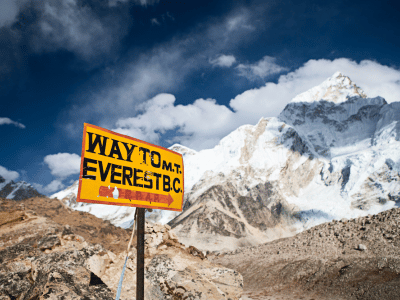
- Trip Extension: Want to explore more of Nepal after your trek? You can easily extend your trip to a destination like Pokhara, Chitwan, or even Everest Base Camp.
- Farewell Dinner: At the end of your trek, we offer a traditional Nepali farewell dinner in Kathmandu. It's our way of saying thank you and celebrating your successful journey
- Departure: We will help you with departure for flight booking or additional travel. Our team will help you transfer to the airport.
See you in the Himalayas.
Let your next story begin here—with us, in the heart of Annapurna. Destination Unlimited Treks.