Gokyo Lake Trekking Overview
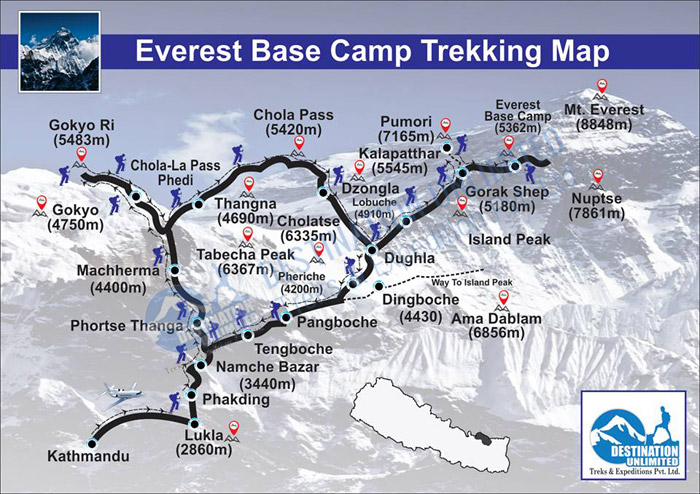
Gokyo Lake trekking is a peaceful, most scenic and least crowded trek in the Everest region. Gokyo Lake is a region adorned with 6 lakes. You can see 6 lakes like Thonak Tsho (Thonak Lake), Gokyo Tsho (Dudh Pokhari / Gokyo Lake), Gyazumpa Tsho (Gyazumba Lake), Tanjung Tsho (Tanjung Lake), Ngozumpa Tsho (Ngozumpa Lake), and Longabanga Tsho (Longabanga Lake) in this trek. Dudh Pokhari (Gokyo Tsho) is the most accessible lake due to its proximity to Gokyo village. This trek is a 14-day moderately difficult trek. The trek starts from Lukla and reaches Gokyo Ri (viewpoint) and the fifth Gokyo lake, Ngozumpa Tsho (Ngozumpa Lake). Anyone who loves mountains, lakes, Sherpa culture and trekking in the Himalayas can do this trek. Would you like to join us on such a valuable trek? Destination Unlimited Trek offers you this trek at a special discounted rate, with an experienced guide and porter, along with good teahouse facilities.
The trekking route and the surrounding conditions justify the trek. Sometimes the trek descends through dense forests and sometimes climbs uphill. Sometimes the trek proceeds along the banks of the Dudh Koshi River, and sometimes it proceeds through the Sherpa settlements in the ancient Khumbu region. You will cross many streams and suspension bridges over the Dudh Koshi River. You will see birds and wildlife on the way in the morning and evening. The trek is geographically determined through different conditions. This trek will be special in terms of the trekking route.
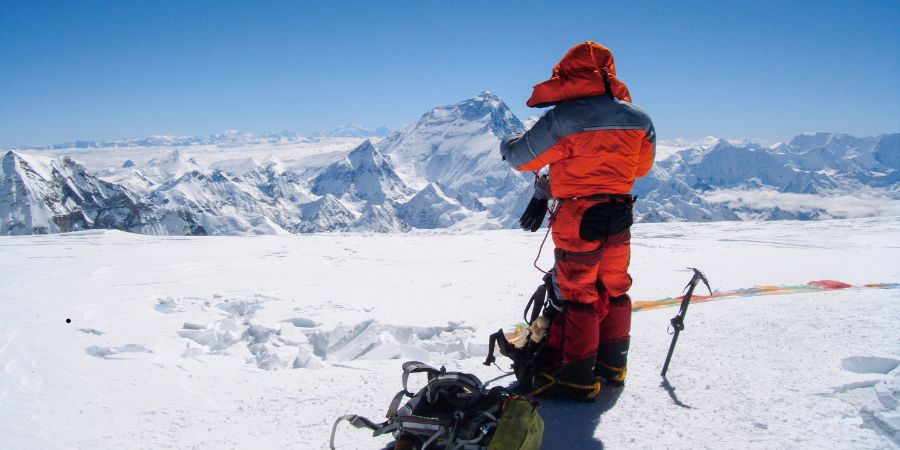
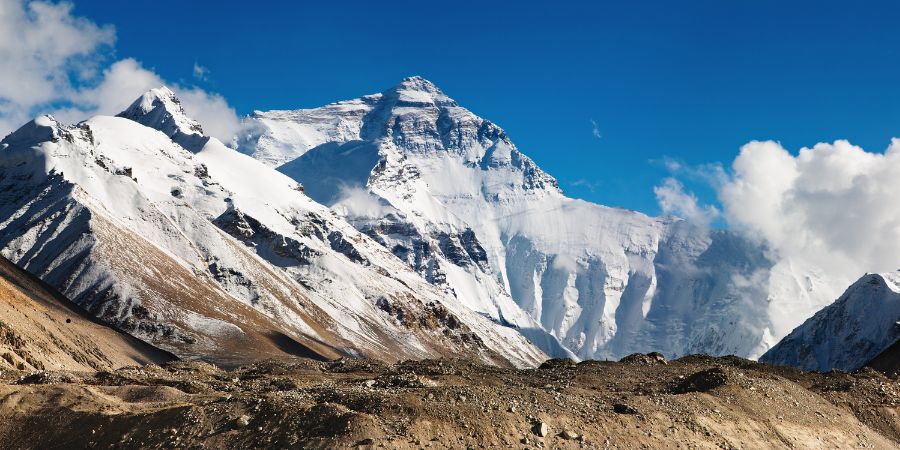
On this trek, you will see many mountains up close. When you reach Namche Bazaar, you will see mountains like Kusum Kanguru (6,367 m), Khumbila (5,761 m), Everest (8,848 m), Lhotse (8,516 m), and Ama Dablam (6,812 m). These mountains are more visible when the weather is clear. You will see many other mountains up close. For example, from Fortse, you will see Cho Oyu (8,188 m), which is the sixth highest mountain. The mountains look more beautiful when seen from a distance than when seen up close. You can take videos and photos with the mountains in the background. This trek is especially important to reach Gokyo Lake. The trek to Gokyo Lake will be unforgettable. When you set out on the journey towards Gokyo, you will see the first and second Gokyo Lakes. The remaining 4 lakes can be reached after reaching Gokyo village. The third lake, Dudh Pokhari, is near Gokyo village. The other lakes are a few kilometers away. We also climb Gokyo Ri. This is a viewpoint. From here you will see the major mountains of the world up close, like Mount Everest (8,848 m), Lhotse (8,516 m), Makalu (8,463 m), Cho Oyu (8,188 m), etc.
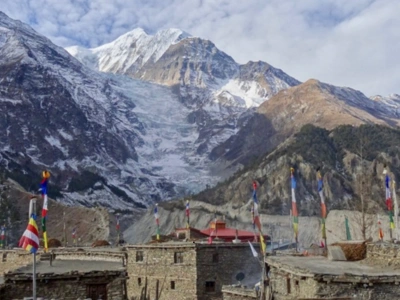
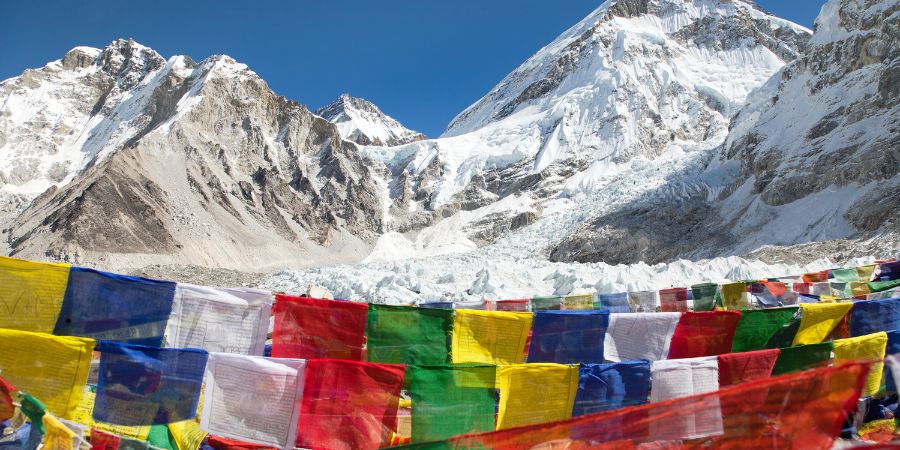
On this journey, you will reach many Sherpa settlements located in the Khumbu region. The Sherpas will welcome you. The Sherpas here mostly believe in Buddhism. You will see the world-famous Himalayan monastery near the settlement. You will find the monastery decorated with Mani walls and prayer flags. In the evening, monks will be praying. Generally speaking, you will see a Himalayan spirituality here. You will stay in a teahouse opened by the Sherpas. Here you will get to eat local dishes. There will be small but warm rooms to stay in. You will get to eat sitting by near firewood. During the stay in the local village, the Sherpas will share a lot of information and stories with you. Overall, this experience will be unforgettable for you.
Gokyo Lake Trekking Highlights
- Opportunity to explore the sacred Gokyo Lakes— You will have the opportunity to explore the Gokyo Lake system, located in the Khumbu region. You will see the main lakes, such as Thonak Tso, Gokyo Tso (Milk Lake), Gyajump Tso, Tanjung Tso, Ngojump Tso, and Langabanga Tso. Of these, Dudh Pokhari is the most accessible, as Gokyo village is located on its banks.
- Gokyo Ri Peak (5,357 m)— This is a famous viewpoint. From here you can see a 360° Himalayan view, including Everest, Lhotse, Makalu and Cho Oyu. The mountains are even more visible from here at sunrise. From here you can also see a wide view of the Ngojumpa Glacier.
- Peaceful and less crowded trek— This trek is peaceful and less crowded than other treks. You will explore quiet forest paths, Sherpa villages, snow lakes, etc. This trek is special for those who are interested in solitude and peace.
- Sherpa Culture and Monasteries— This is the Khumbu region. There are ancient Sherpa settlements here. You can indulge in Sherpa culture, festivals and religious activities. You will see villages filled with Buddhist monasteries, mani walls and prayer flags. You will stay and dine at traditional Sherpa teahouses, making this a very culturally rich trek.
- Panoramic mountain views— You will see panoramic mountain views on this trek. You will see clear views of Hakusum Kangaroo, Khumbila, Everest, Lhotse and Ama Dablam from different points of the trek.
Route Overview of the Gokyo Lake Trekking
Upon arrival at Tribhuvan International Airport, your trekking representative will welcome you. This will be our first meeting. After the meeting, you will be taken to Thamel. You can take a short walk or visit the tourist center of Thamel. In the evening, the guide will explain the trekking. The next day, we will fly to Lukla. Our trekking starts from Lukla. The first trek will be from Lukla to Phakding.
The next day, we will start the journey from Phakding to Namche Bazaar. From here, you may feel that the real journey has begun. The guide will tell you a lot about the place. It can be more fun if you are traveling in a group or are interested. The journey from Phakding to Namche Bazaar is a bit uphill and steep. In that sense, this journey is a bit challenging. After some time, you will reach Namche Bazaar by crossing some bridges, including the Hillary Suspension Bridge, along the banks of the Dudh Koshi River. This is a slightly developed but old Sherpa town. Here you can do some shopping. Here we will stay at the hotel. We will stay here for the next day as well. This is special for acclimatization. For acclimatization, we will do a short trek. For that, we will do a short hike to Everest View Hotel (3,880 m) and Khunde and Khumjung villages. Khunde and Khumjung villages are a Sherpa settlement. Here you can see Hillary School and a monastery that houses a yeti scalp. After some time, we will return to Namche Bazaar for the night. The next day, we will trek to Phortse Village (3,810 m).
The journey from Phortse to Machhermo is a bit challenging. The trail passes through small villages, hills, and yak pastures. Some of the views are breathtaking. Here you will have to climb continuously for some time. You will continue your journey along the Dudh Koshi Valley surrounded by the peaks of Cholatse and Taboche. After reaching Machhermo, you can enjoy the magnificent views of the world's sixth-highest mountain, Cho Oyu (8,188 meters). In Machhermo, we will spend a night in a teahouse. The stay here will be very memorable. There are mountains all around. The cold will also be experienced here. In the teahouse, you can eat chicken meat, local alcohol, etc., which will warm you up.
The next day we will now head towards the main destination of the trek, Gokyo Lake. Our trek gradually enters the Gokyo Valley. Then, the path climbs along the side of the largest glacier in Nepal, the Ngojumpa Glacier. We will now slowly head towards Gokyo Village. Before reaching Gokyo Village, you will see 2 famous lakes. These two lakes are Longpongo and Taboche Tso. There are actually 6 lakes here; these 6 lakes are collectively called Gokyo Lake. Gokyo Village is located next to the third lake (Dudh Pokhari). The other lakes are Thonak Tso (fourth lake)—4,840 meters, Ngojumpa Tso (fifth lake)—4,980 meters, and Gyajumpa Tso (sixth lake)—~5,000 meters. We return to Gokyo Village for the night's stay.
The next day we trek to Dole. We finally reach Lukla via Namche Bazaar, and our journey ends.
Gokyo Lake Trekking—14-Day Itinerary
Gokyo Lake Trekking — What to Expect
The Gokyo Lake Trek provides a somewhat quieter and more scenic alternative to the iconic Everest Base Camp trek. It takes you through tiny Sherpa villages, expansive glacial valleys, and to the heart of the Gokyo Valley and turquoise glacial lakes. An unspoiled landscape, a superbly tranquil environment, with fewer trekkers and plenty of peace and quiet.
One of the highlights is the climb to Gokyo Ri (5,360m)—a viewpoint that provides a stunning panorama view of Everest, Lhotse, Makalu and Cho Oyu. The trek itself consists of a walk for 5-6 hours each day over varied terrain, with gradually building altitude. It is very challenging, but certainly achievable with fair fitness and a steady pace.
For outstanding views of the Himalayas without the crowds, the Gokyo Lake Trek is a remarkable experience with natural beauty, local culture and tranquillity in the mountains.
Gokyo Lake Trekking Cost—Full Breakdown
Budgeting for your Gokyo Lake Trek will help you prepare for the journey, and avoid unexpected costs in the process. This trek offers excellent value due to its remote location, breathtaking views and overall experience. Prices will fluctuate due to the season, trekking group size and service preferences - so this is an overall idea of what to expect. We will discuss everything from permits and food to guide fees so that you have a good understanding of your funds.
Here is a cost breakdown on average per person based on a 12-day Gokyo Lake Trek:
Gokyo Lake Trekking vs. Other Treks in Everest
The Gokyo Lake Trek can be a more tranquil and less traveled alternative trek to the classic Everest Base Camp (EBC) trek. Both trails take you into the heart of the Everest region, but Gokyo offers something a little different - turquoise lakes, glacial crossings, the spectacular viewpoint of Gokyo Ri which completely beats Kala Patthar with arguably better panoramic mountain views.
The Gokyo trail is less traveled and less populated than the Everest Base Camp route, with fewer teahouses line the trail and fewer tourists to walk alongside you on your trek. It is perfect for the adventurous who want a more subdued nature trek, while still experiencing awe-inspiring views of Everest, Lhotse, Makalu, and Cho Oyu.
Unlike the Everest Three Passes Trek, which is physically arduous and only for experienced trekkers, the Gokyo Lake Trek is moderate-to-challenging and suitable for most healthy adventurers. It includes some high-altitude walking but is less demanding and/or climactic than the more technical sections of the high passes.
To summarize, if you seek a quieter adventure with stunning scenery with rewarding views of the top peaks of the world, without missing dramatic scenery, the Gokyo Lake Trek may be the perfect trek for you.
What is the best season to trek to Gokyo Lake ?
Choosing the right season can make a big difference in your Gokyo Lake trekking experience. The trail offers incredible views year-round, but weather, visibility, and trail conditions vary with each season. Here's a simple guide to help you pick the best time to go:
Spring (March to May) – One of the Best Times
- Clear skies and stable weather
- Blooming rhododendron forests along the trail
- Comfortable daytime temperatures
- Great visibility from Gokyo Ri and other viewpoints
- Popular season, so some trails may be busy
Autumn (September to November) – Equally Ideal
- Crisp, dry weather with excellent mountain views
- Post-monsoon clarity means stunning scenery
- Cool but pleasant trekking temperatures
- Peak season—expect more trekkers on the trail
Winter (December to February) – Cold but Peaceful
- Clear skies with snow-dusted mountain peaks
- Fewer people on the trail—peaceful experience
- Very cold at night; some lodges may be closed
- Snow and ice can make some sections tricky
Monsoon (June to August) – Not Recommended
- Heavy rain makes trails slippery and muddy
- Cloudy skies limit mountain views
- Increased risk of flight delays to/from Lukla
- Best avoided unless you're experienced in monsoon trekking
If you want epic views and vibrant landscapes, go for spring or autumn. Winter is peaceful but cold, while monsoon season is best skipped unless you really love rain!
Trip Essentials and Important Information for Gokyo Lake Trekking
Before you set off for the Gokyo Lake Trek, it’s smart to get a few key details sorted out. This is a high-altitude trek, and while it doesn’t require technical skills, being well-prepared can make your journey far more comfortable and stress-free. From your Nepal visa to currency, travel insurance, and local essentials, here’s what to take care of:
How to Book Gokyo Lake Trekking
Booking your Gokyo Lake Trek is simple and stress-free when you plan ahead. The first step is to choose the right time—spring (March to May) and autumn (late September to November) are the best seasons for clear views and good trail conditions.
Once you’ve picked your dates, get in touch with Destination Unlimited Treks. We’ll guide you through the process, including permits, accommodation, and transport. You only need at least a 20% deposit to confirm your trek. The rest can be paid when you arrive in Kathmandu.
You can pay by bank transfer, card, or cash, depending on what works best for you. We also offer group departures if you’re traveling solo and want to join others.
After booking, you’ll receive your full itinerary, packing list, and helpful information for your trip. From the airport pickup to your return, we make sure everything goes smoothly.